

Flash floods leave at least eight dead and hundreds missing in northern Nepal
Catastrophic flash floods have torn through mountain communities in northern Nepal, killing at least eight people and leaving hundreds more unaccounted for, according to informatio
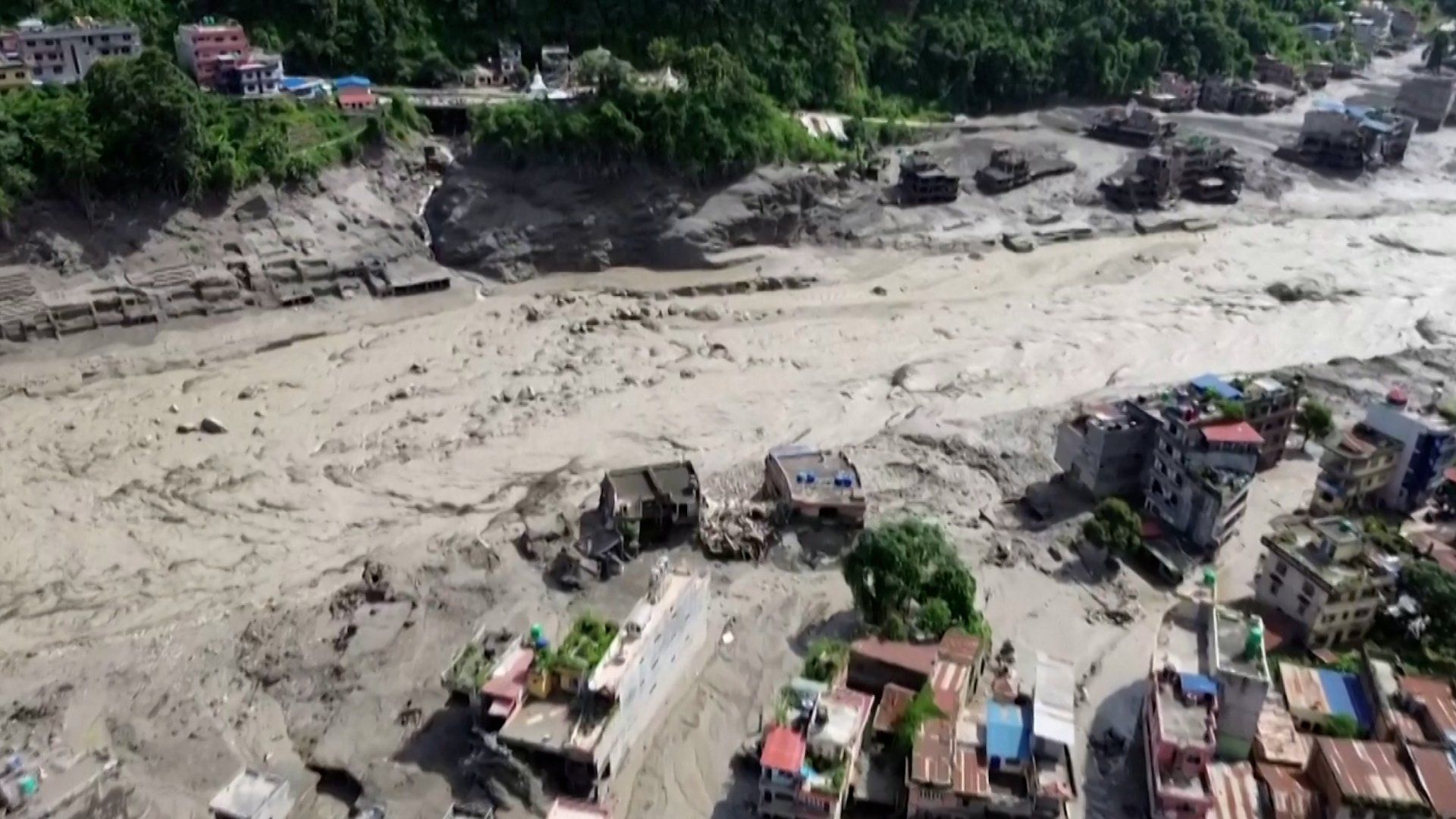
Catastrophic flash floods have torn through mountain communities in northern Nepal, killing at least eight people and leaving hundreds more unaccounted for, according to information published on Wednesday, August 26, 2026.
Footage circulated by Nepali police shows churning rivers of sediment-heavy water barreling down steep valleys and engulfing entire settlements, offering a stark picture of the speed and force with which the disaster unfolded across the highland region.
Along with the confirmed fatalities, the floodwaters swept away numerous homes, destroying shelters in villages that lie along the paths of the surging water. Officials say the full extent of the destruction is only beginning to emerge as teams work to gauge the scale of the damage.
The number of people missing — running into the hundreds — has raised fears that the death toll could climb significantly once rescue crews are able to reach cut-off areas and account for residents who fled or were caught in the torrents.
Videos shared by law enforcement captured terrifying scenes of muddy water crashing through mountain hamlets, toppling structures and carrying debris downstream. The imagery has underscored how little warning communities in such terrain can have when floodwater is unleashed from higher ground.
Northern Nepal's rugged landscape compounds the emergency. Villages scattered across steep slopes and narrow valleys are often difficult to access at the best of times, and flooded roads, damaged bridges and unstable slopes can leave responders struggling to move personnel and equipment into affected zones.
Authorities have begun assessing the aftermath, working to establish which areas were hit hardest, how many homes were lost and where survivors may have gathered. With communication lines and transport routes potentially disrupted by the floods, verifying conditions on the ground remains a slow and hazardous process.
Flash flooding of this kind is a recurrent danger in Nepal, particularly during the summer monsoon months when sustained rainfall saturates hillsides and swells streams that can rapidly transform into destructive torrents. Steep topography means water descends with enormous force, giving residents in its path scant time to escape.
For families in the affected districts, the immediate priorities are search and rescue: locating those who disappeared as the water surged, treating the injured and sheltering those whose houses were destroyed. The loss of homes in remote mountain areas leaves displaced residents dependent on aid reaching them over difficult terrain.
The coming days are expected to prove critical. As assessment teams compile casualty and damage reports, the confirmed death count of eight may rise if the large numbers of missing people are not found safe, while the destroyed villages will require substantial relief and rebuilding support.
Further details about the floods, including the hardest-hit locations and coordinated relief operations, are expected to be released as authorities continue their response in the affected northern reaches of the country.
What's Your Reaction?
 Like
0
Like
0
 Dislike
0
Dislike
0
 Love
0
Love
0
 Funny
0
Funny
0
 Wow
0
Wow
0
 Sad
0
Sad
0
 Angry
0
Angry
0

Editor Hukum. Alumni FH UI. Meliput pengadilan, MA, dan judicial review.





Comments (0)